British Virgin Islands Food: Dishes to Know

The guidebooks will tell you to come to the British Virgin Islands for the sailing, but they should really be telling you to come for the conch and lobster!
The BVI is a mix of cultures and palates stemming from African, East Indian, Spanish, Dutch, English, plus a surplus of American visitors over the last century. Being a tourist hub with residents from all over the world, the local cuisine here is shaped by that same mix.
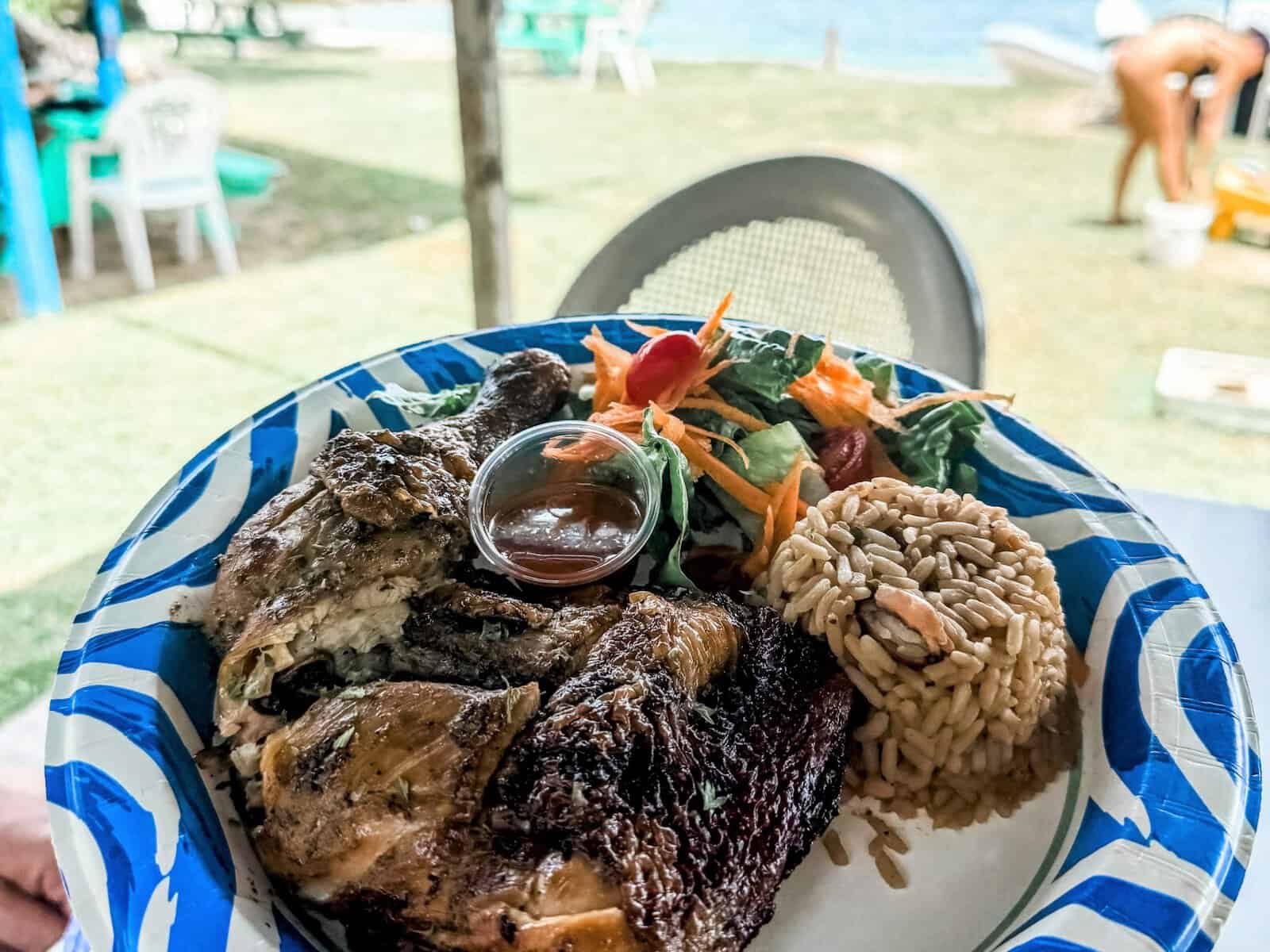
We’re covering everything from the traditional dishes to the broader cuisine found on the menus throughout these islands. We’ve spent decades traveling here, and more recently, six years living here and running sailing charters, so we’ve had a lot of time to eat our way around the island chain!
Traditional & Heritage Dishes
Fish & Fungi
Fish and fungi is the national dish of the British Virgin Islands. Fungi is a side dish made with cornmeal, okra, butter, water, and salt, with a consistency similar to polenta. Despite the name, there’s no mushrooms involved, and it’s traditionally served alongside fish.
It holds a special place as the national dish, tied closely to the islands’ history, though it’s not something you’ll find on most of the island’s popular menus. It’s more the kind of dish you’ll come across at a handful of local spots around Road Town.
Goat Water
Goat water is a rich, slow-cooked hearty stew made with goat meat and vegetables. You’re more likely to come across it at a food festival than on a regular dinner menu, but if you do come across, don’t pass up the opportunity!
Oxtail
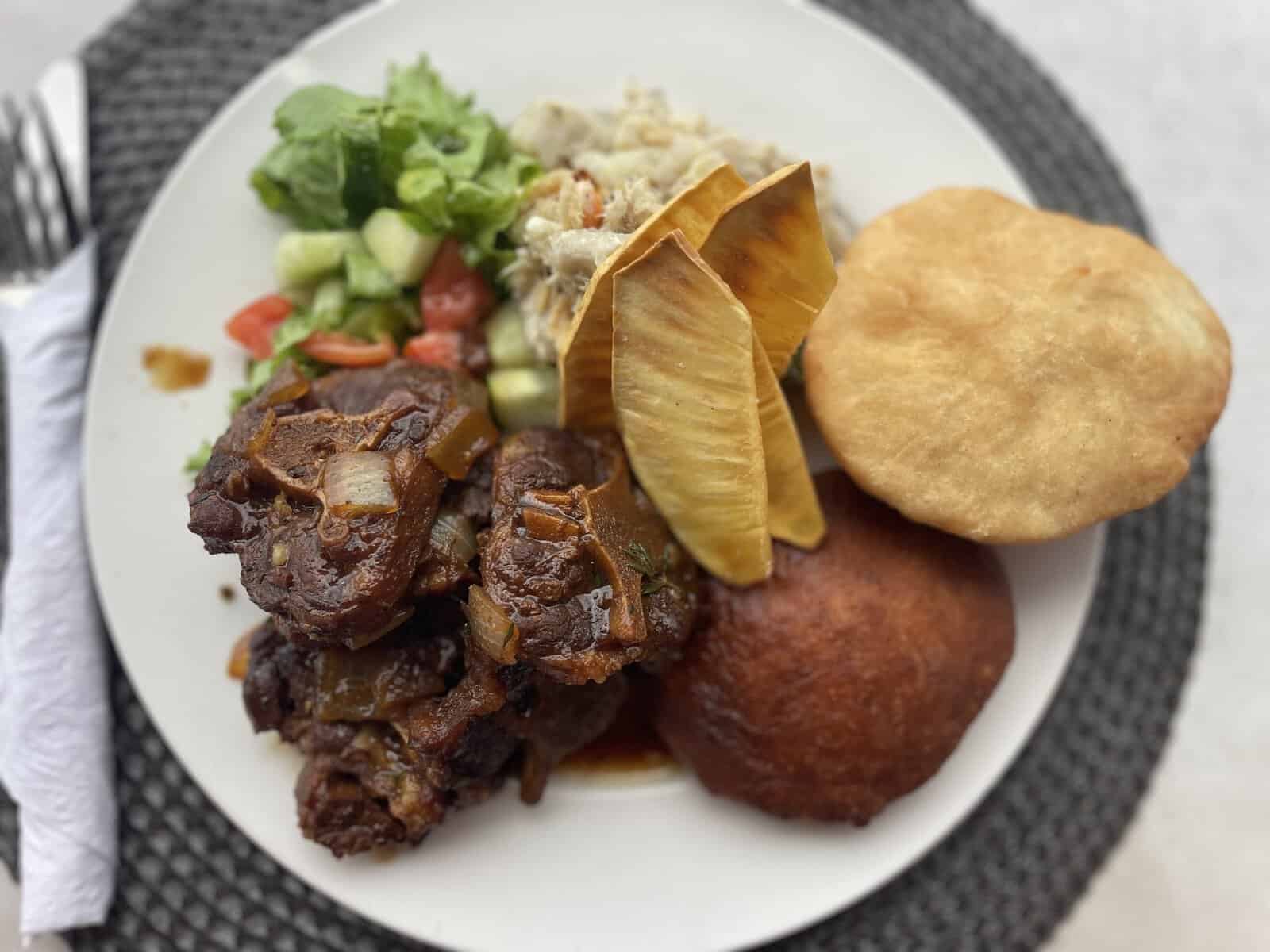
When we see oxtail on a menu, we order it! The meat is braised for hours with herbs, garlic, peppers, and onions until it’s fall-of-the-bone. A comfort food in a thick gravy, oxtail is served with rice and peas, coleslaw or side salad, and often fried plantains.
Saltfish
Saltfish is dried, heavily salted white fish that must be soaked and cooked to remove excess salt before being used in a variety of dishes. In the grocery store, you’ll usually find it near the produce section, salted and bagged.
It’s a traditional and very popular breakfast item here, often served with johnny cakes or cooked into many of the other dishes mentioned.
Callaloo Soup
Callaloo is a dark leafy green, similar to spinach, cooked down into a soup with lots of spices. You’ll find it on most menus around the islands, and it’s one of the easiest traditional dishes to try since it’s so widely available.
Rice & Peas
If there’s one side dish that shows up on nearly every plate here, it’s rice and peas. “Peas” usually means beans, not English peas, cooked right in with the rice. It’s simple, but it’s the side you’ll see paired with just about anything, from stewed chicken to fish to conch.
Fresh Seafood & Grilled Favorites
Conch
Conch is a true staple of the Caribbean, not just in the BVI. If you’ve ever seen a giant pink conch shell, that’s what we’re talking about here.
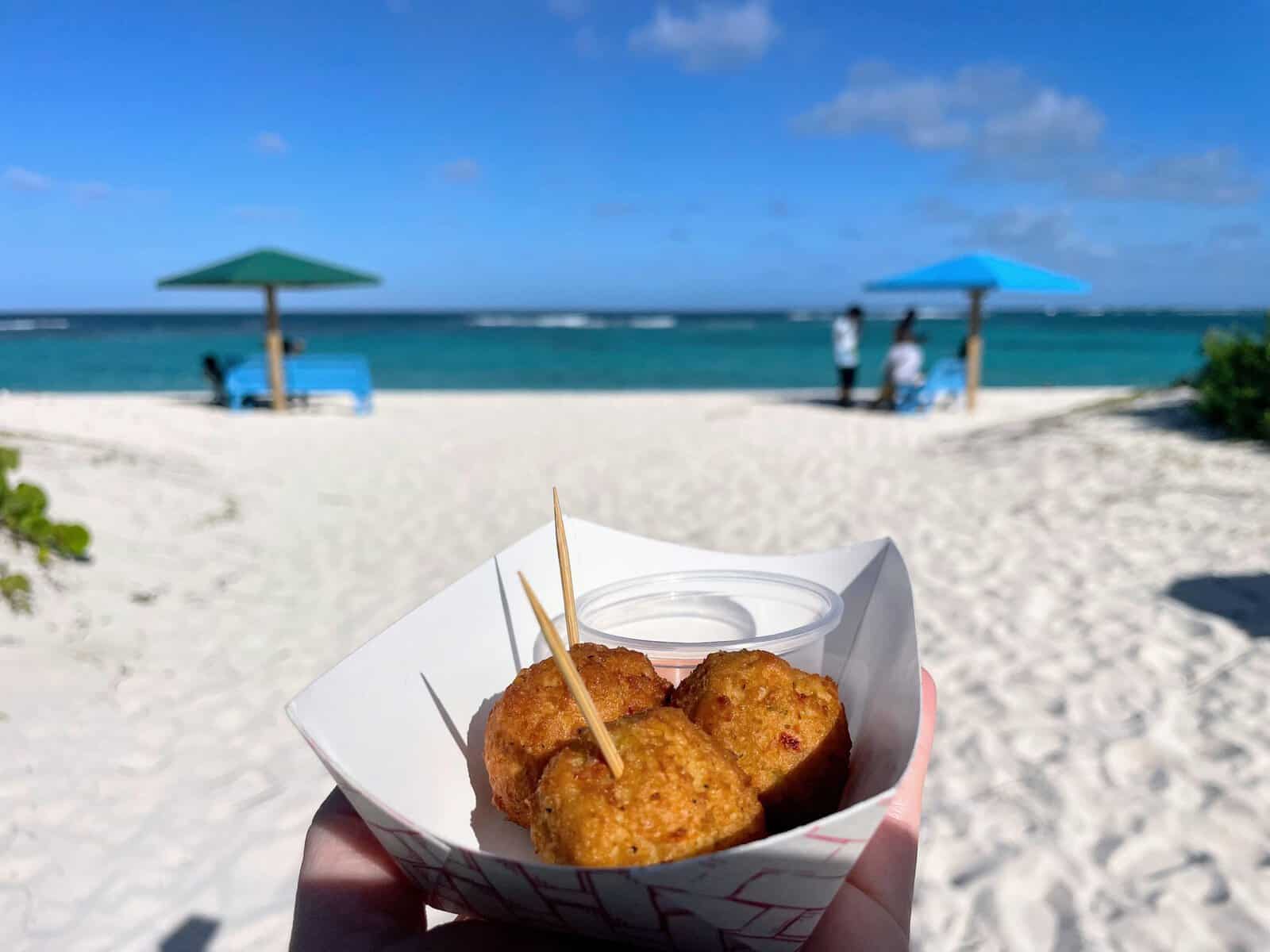
Conch fritters are what you’ll see on almost every menu. They’re similar to hush puppies with bits of conch mixed into the breading, and every restaurant, and every local, has their own version with their own spices.
My favorite way to have it, though, is conch salad or conch ceviche. Fresh conch is chopped to tiny bits then served in lime juice, onions, peppers, cilantro, and a medley of other ingredients that the chef chooses. It’s the best fresh salsa straight from the sea!
You can’t beat conch ceviche on a conch island tour off Anegada. Your guide dives down and harvests the conch right there: cracks the shell, pulls the body out, cleans it, rinses it in salt water, cuts it up, and makes fresh conch ceviche right on the boat. Dropped straight into lime juice, fresh out of the sea, nothing compares to it.

Cracked conch is lightly breaded and quickly flash-fried, and it’s also very easy to get wrong. we’ve had incredible cracked conch, and we’ve had incredibly bad cracked conch. The difference almost always comes down to whether it’s pounded enough to tenderize before it’s fried.
Conch stew is another Caribbean favorite. Slow cooked with pepper, onion, and garlic, the slow-cook brings out a deeper flavor and sweetness to the white meat.
Conch has a closed harvest season here to help protect the population. If you don’t see it on a menu during part of your trip, that’s usually why.
Lobster
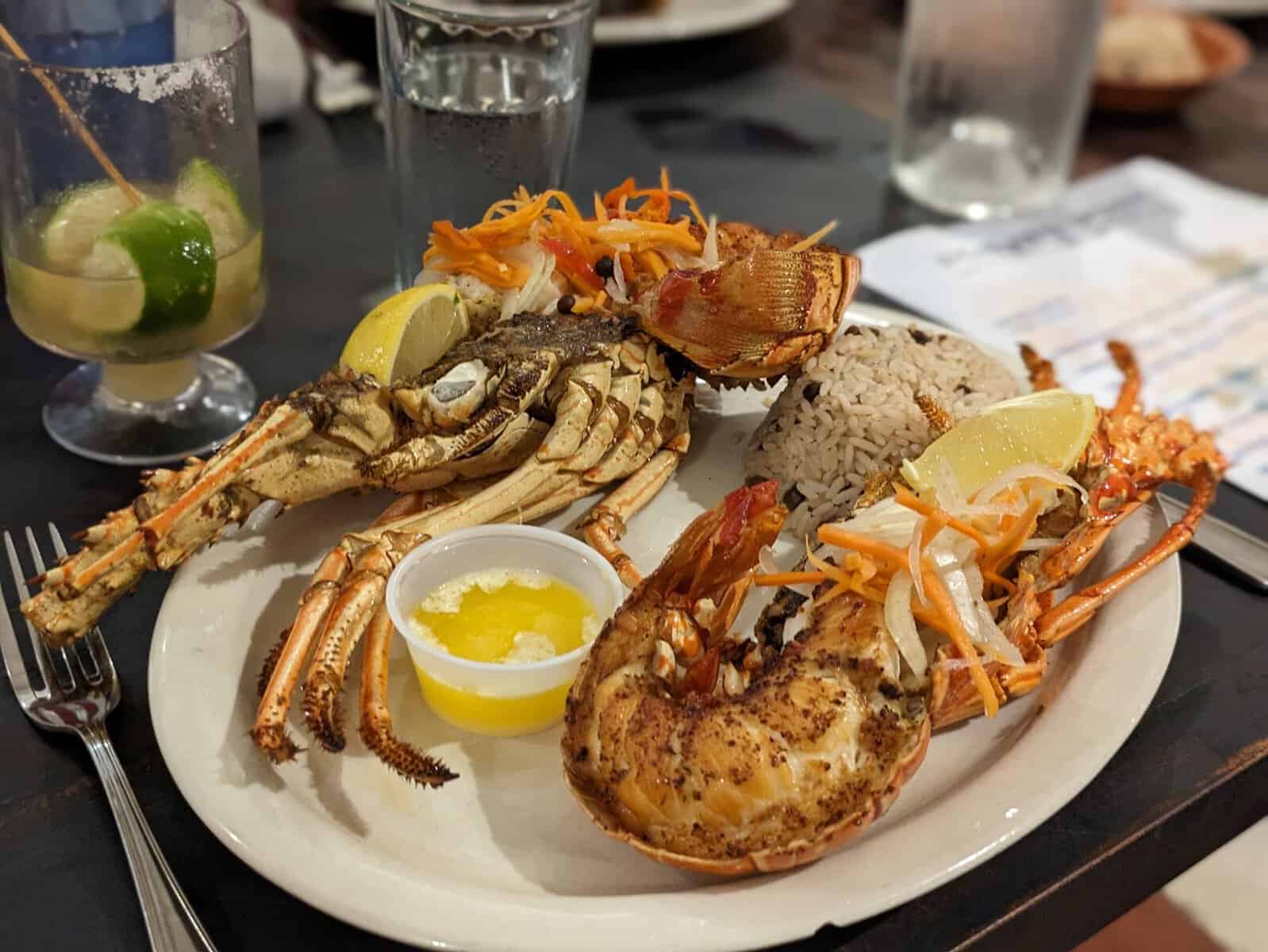
Lobster is another traditional seafood you’ll see on nearly every menu here. The BVI is well known for it, and Anegada in particular is where most of the conch and lobster throughout the territory comes from.
There’s also a sustainable, land-based lobster farm on Tortola, Caribbean Sustainable Fisheries, raising Caribbean spiny lobster using an aquaculture model developed by a marine biologist. It’s the first business of its kind in the BVI, and we actually sourced lobster from them when we were running charters.
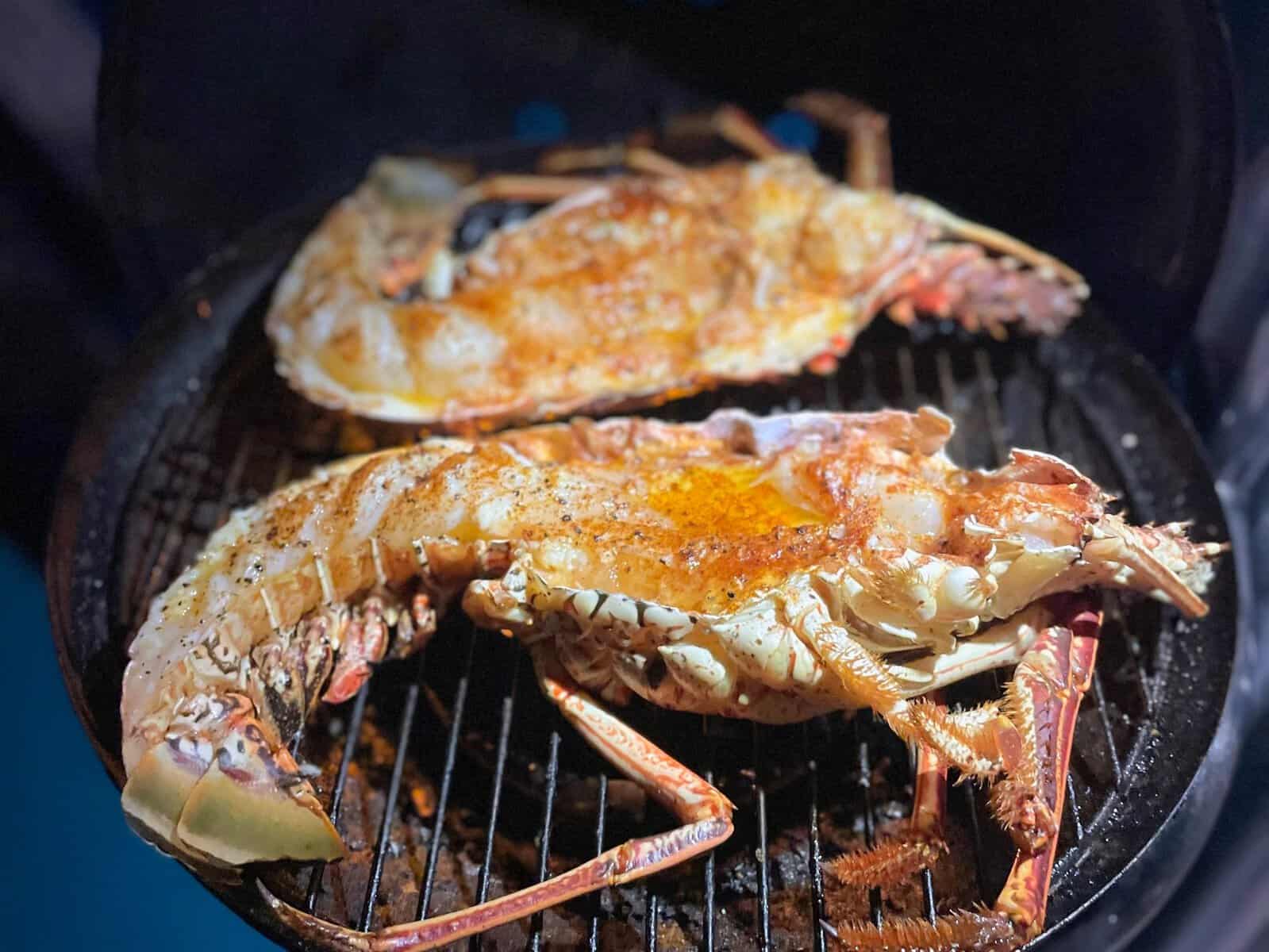
The traditional way lobster is served in the Caribbean is halved and grilled, though you’ll sometimes find just the tail on offer, usually on the more tourist-facing menus.
Joe could hold a clinic on how to properly eat a lobster. When he’s done, there’s nothing left but a pile of shell pieces. If it still looks like a lobster, you left too much on the plate.
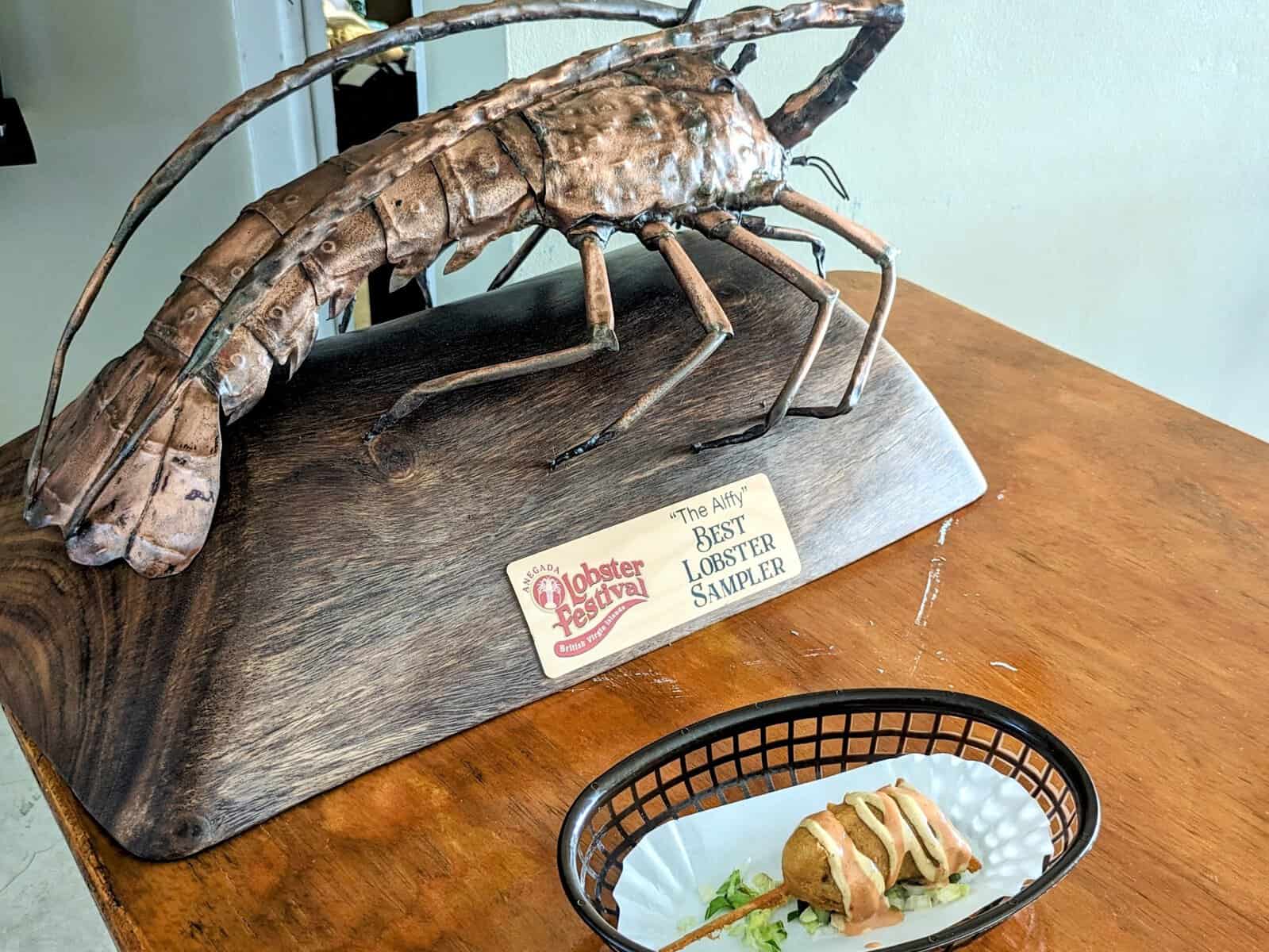
Lobster also has a closed season here, so availability can shift depending on when you visit. Anegada’s Lobster Festival marks the official start of the season, an event locals and tourists alike look forward to, with extra ferries running all weekend from Tortola and even the U.S. Virgin Islands to handle the crowds.
Grilled Fish
Beyond saltfish, fresh fish is everywhere here. Mahi-mahi, wahoo, and tuna are the most common catches, and it’s usually kept simple by grilling over an open flame, sometimes blackened, with lime and butter doing most of the work.
Ciguatera is a type of food poisoning caused by toxins that can build up in larger reef fish such as grouper, snapper, and barracuda. The toxin isn’t removed by cooking or freezing, and affected fish look, smell, and taste normal.
When choosing seafood in the BVI, ask locally about ciguatera risk. Open-ocean fish like mahi-mahi, wahoo, tuna, and marlin are generally considered lower-risk choices. 🐟
Jerk Chicken & BBQ Chicken
Jerk chicken has a big presence on menus here, and arguably, BBQ chicken is just as common. Between the two, you’ll find some version of grilled or smoked chicken on almost every menu across the islands.
Street Food & Snacks
Roti
Roti is another dish you’ll find throughout the Caribbean. Its roots trace back to India, where roti is a type of flatbread, and it came to the Caribbean with Indian indentured workers in the 1800s.
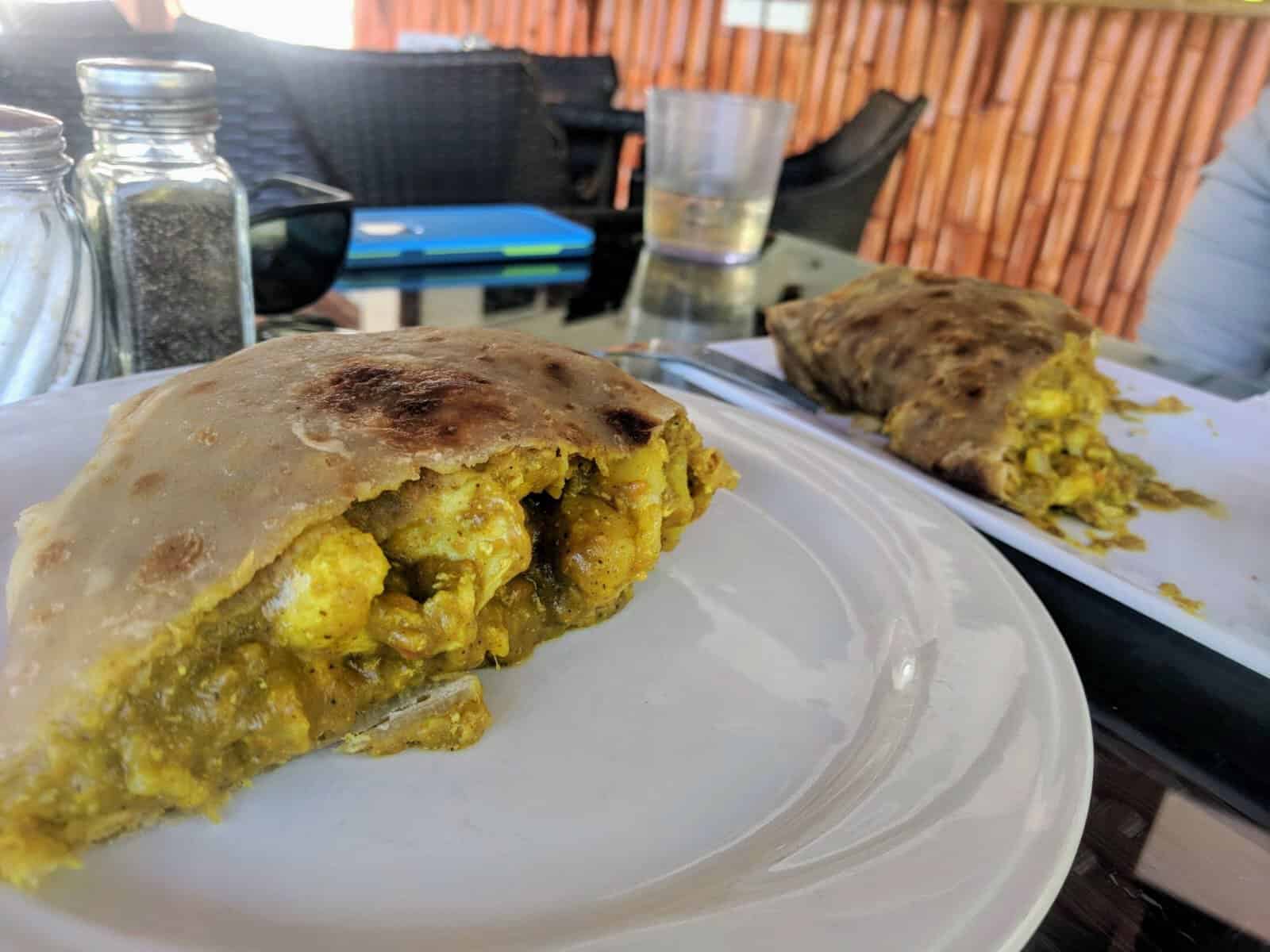
The Caribbean version is a soft, wrap-like flatbread, similar to a large tortilla, filled with anything from chickpeas or vegetables to chicken, meat, or saltfish in a flavorful curry-style filling. Today, you’ll find roti everywhere from roadside stands to restaurant menus throughout the Caribbean.
Johnny Cakes
Johnny cakes are fluffy fried bread, a little sweet, a little doughy, and make a great snack any time of day. They’re also a popular side dish and/or breakfast treat.
Pates
Pates (pronounced pah-TAYS) are the BVI’s version of a Jamaican patty or Spanish empanada. It’s a fluffy pastry wrapped around a protein, such as beef, chicken, fish, vegetables, or chickpeas, seasoned and quickly fried.
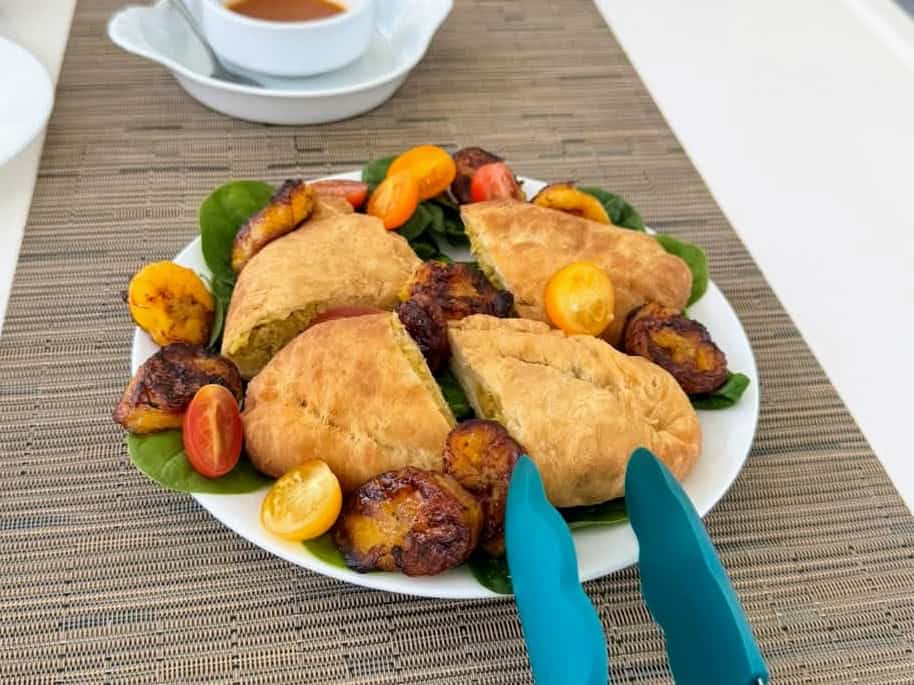
The island of Jost Van Dyke is especially well known for delivering pates to visiting yachts via dinghy each morning.
Sweet Treats
Traditional sweets are a small but interesting part of BVI food culture. Coconut tarts and sugar cake are two of the better-known treats, and you’ll often find them at celebrations, festivals, and food events. Tamarind is turned into sweet treats, including a thick, sweet-and-tart stew, while fruits such as gooseberries can be cooked down with sugar for a simple homemade treat. You’ll also find plenty of tropical fruit grown locally, including mango, sugar apple, and soursop, which are enjoyed fresh when they’re in season. Around Christmas, traditional favorites include black cake and guavaberry tarts.
Local Drinks
Painkiller
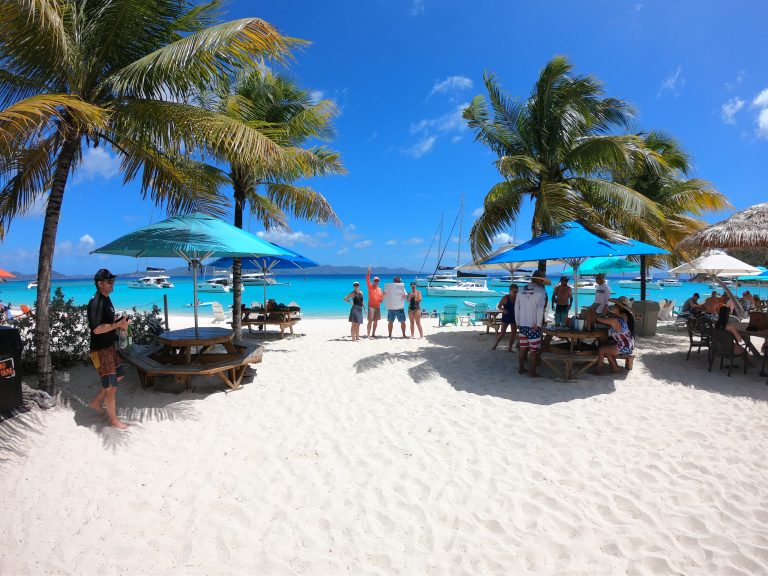
You can’t come to the BVI without hearing about, and probably trying, a Painkiller at the Soggy Dollar Bar. It’s made with rum, pineapple juice, orange juice, and cream of coconut, generally served as a strong rum drink. Pusser’s rum and the British Navy play a big role in the drink’s history and story.
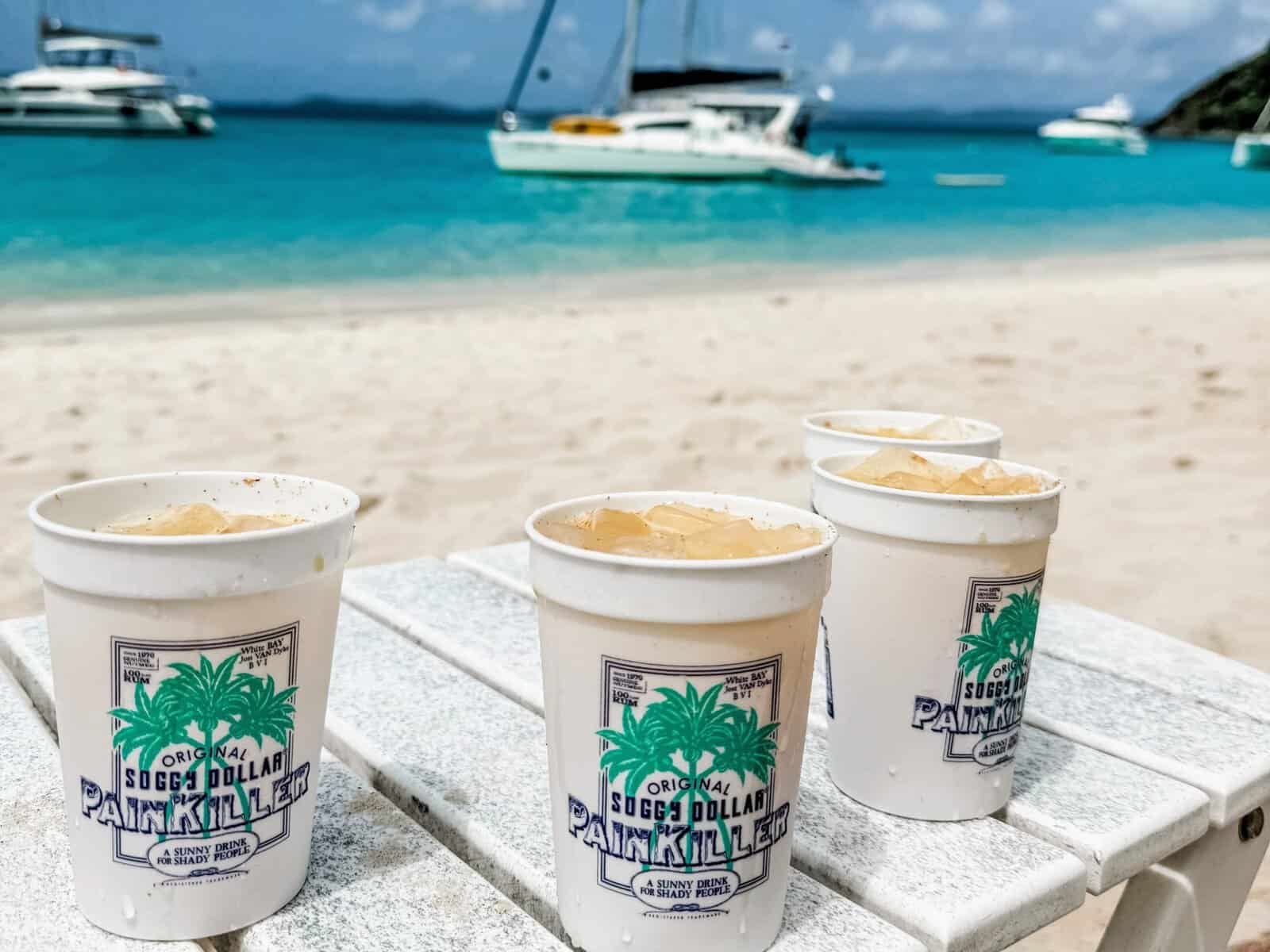
Jost Van Dyke is worth exploring beyond its famous Painkiller. Check out our guide to the island’s beaches, bars, and more for more of our favorite stops.
Callwood Rum
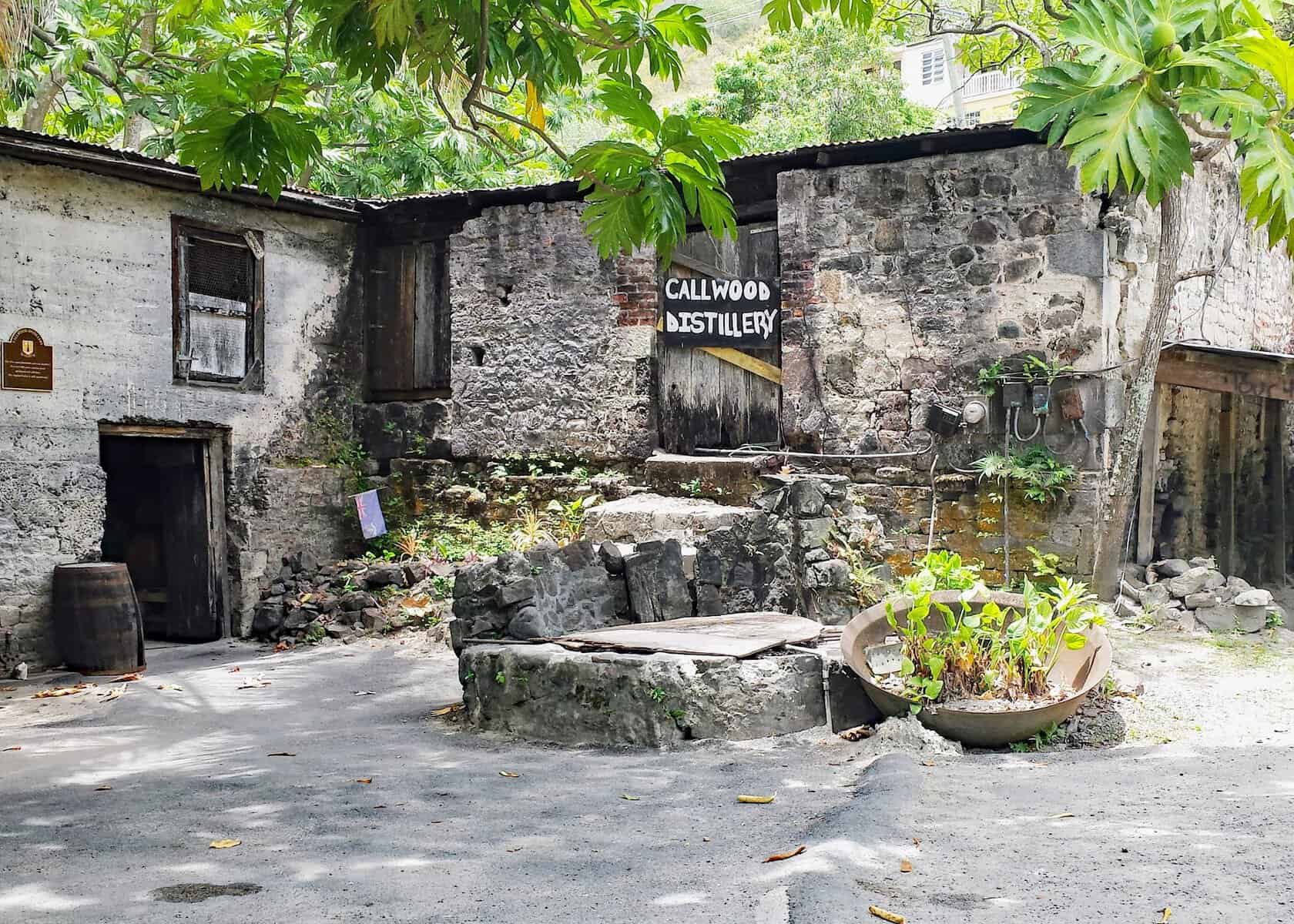
Tortola is home to Callwood Distillery, on the Arundel Estate in Cane Garden Bay. It’s the only working rum distillery left in the BVI, and one of the oldest continuously operating pot stills in the Caribbean, with rum production on the property tracing back roughly 200 years.
The Callwood family is still making rum today the same way they have for centuries, distilled in a small stone building using sugar cane grown right on the property. The only change over the years is that the press that crushes the sugar cane is now run by a machine instead of a donkey.
Bush Tea
“Bush” refers to wild, locally grown plants and herbs, and bush tea is the herbal tea made by steeping them: soursop leaves, lemongrass, ginger, mint. It’s a tradition across the Caribbean, often tied to home remedies passed down through families.
Fresh Juices
Fresh juices are popular throughout the Caribbean because the fruit is so readily available.
Fresh Tamarind is one of our go-tos; we describe it as tasting like a Sour Patch Kid, kind of sweet, kind of tangy. I like to make it into a puree, and Joe makes an incredible tamarind margarita out of it. On its own, tamarind juice has an earthy but sweet flavor.
Soursop has that same earthy quality, almost like fresh-cut grass. Passion fruit shows up in a lot of local cocktails too, and it’s easy to find around the island.
Coconut Water
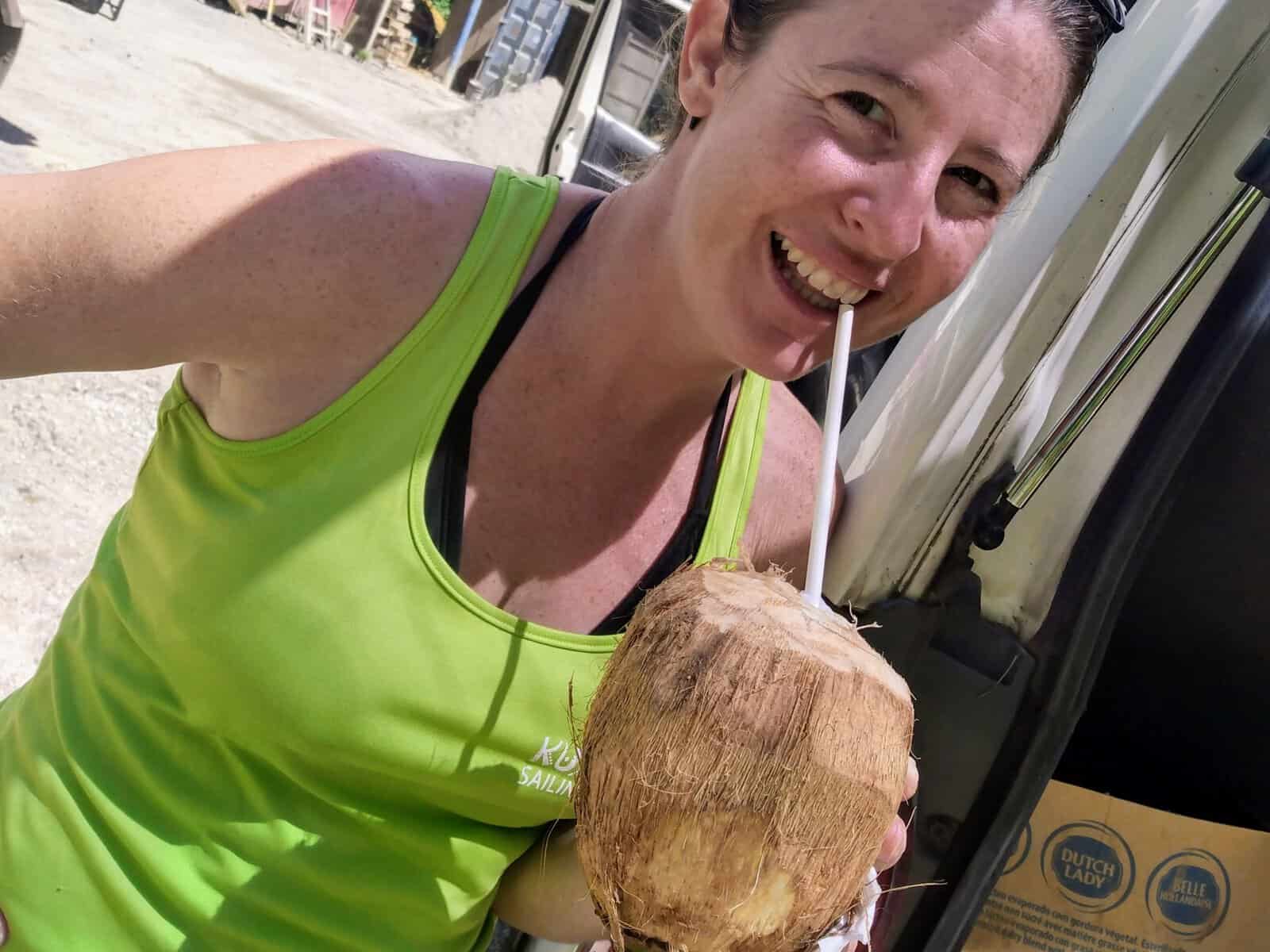
No BVI drink list is complete without coconut water. Guys actually do climb palm trees, cut down fresh coconuts, and serve it straight out of the shell with a straw. If you’re looking for an additive to the coconut water, rum is everyone’s first choice, but Joe likes his coconut water with gin.
The British Virgin Islands Dining Scene
Fine Dining
“Fine dining” is a bit of an elevated term for how things actually work here. Nice restaurants are everywhere, but almost none of them enforce the dress code a true fine dining spot would require. Remember we’re in the Caribbean. You can show up dressed to the nines and you’ll fit right in, or show up in a sundress and flip flops and you’ll fit in just as well.
Tortola and Virgin Gorda are where you’ll find the islands’ most elevated food scene with incredible dishes, stunning water views, and chefs who’ve trained all over the world.
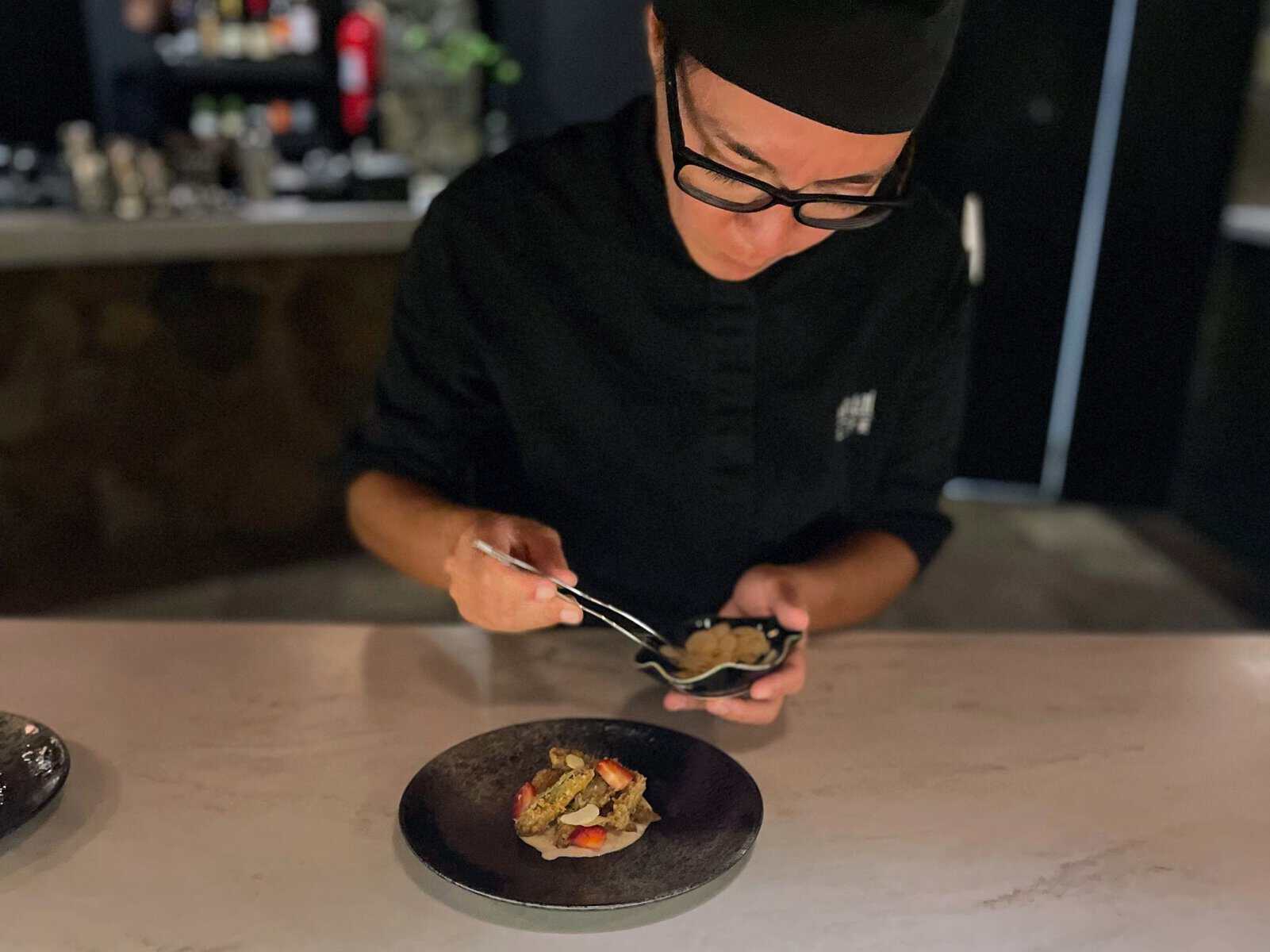
Because the BVI is a yachting destination, private yacht chefs are a real part of the gourmet dining scene here, cooking multi-course meals on board for charter guests, often at a level that rivals the best restaurants on land.
International & Fusion
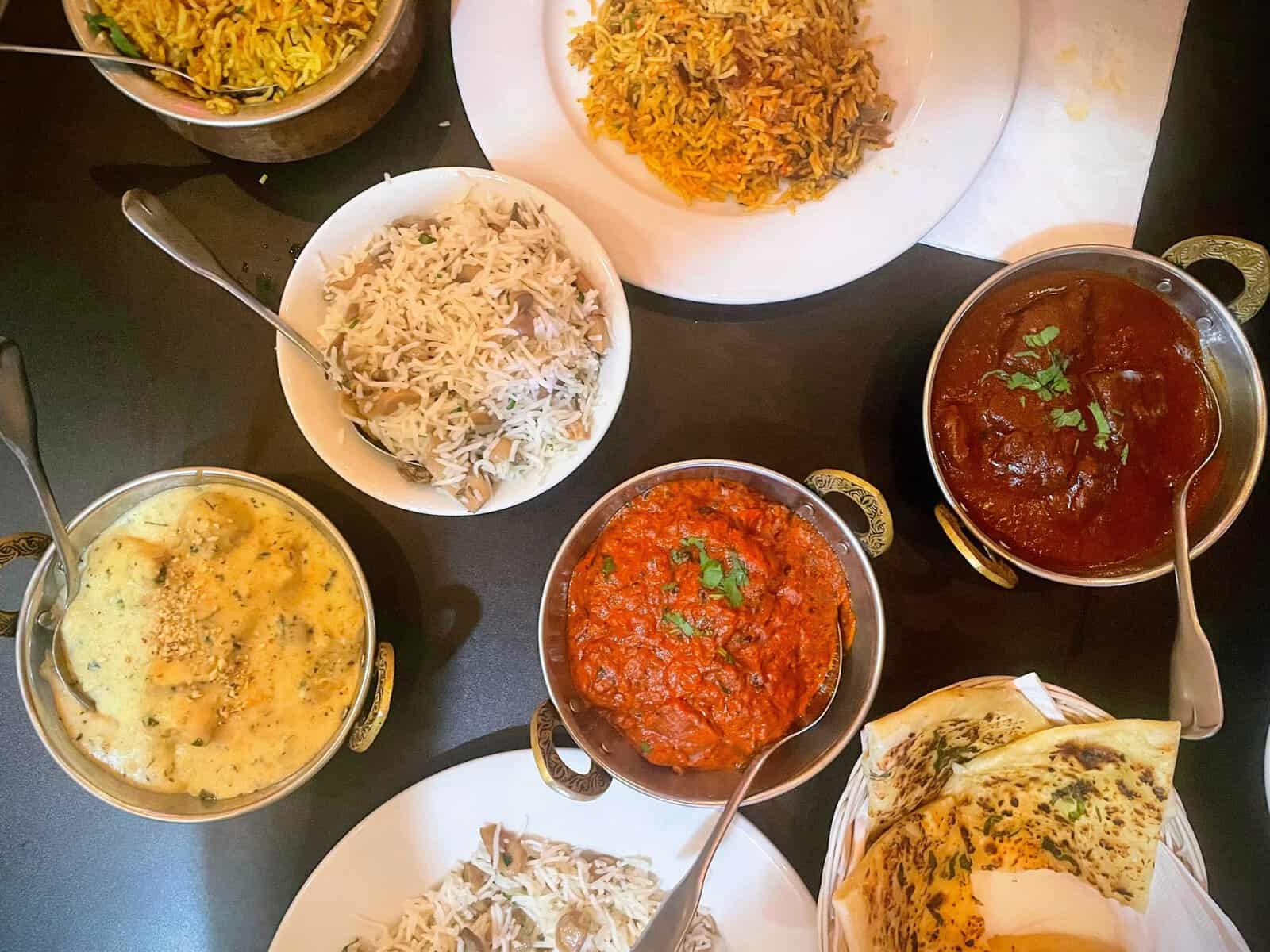
The BVI is a true melting pot. Our residents come from all over the world, and the food scene reflects that same diversity. You’ll find Indian, Thai, Filipino, Japanese, Chinese, Mexican, Italian, French, and Mediterranean restaurants, along with MANY different Caribbean nationalities bringing their own food to the islands. American influence shows up everywhere too. You’ll see pizza on nearly every menu and burgers on most. There’s even a Nigerian food stand at Pier Park in Road Town, bringing West African flavor into the mix.
Our Ultimate 7-Day BVI Sailing Itinerary makes it easy to island-hop, explore the BVI’s incredible food diversity, and try something different along the way.
Local Home Cooking
This is where the true flavor of the Virgin Islands comes from. These are the spots run by islanders, where it genuinely feels like you’ve walked into someone’s kitchen, and they’re cooking local dishes for you the way they’d cook for their own family.
They’re not ordering from providers that fly in food internationally; these chefs are going to the store and buying everything themselves, the same as you would.
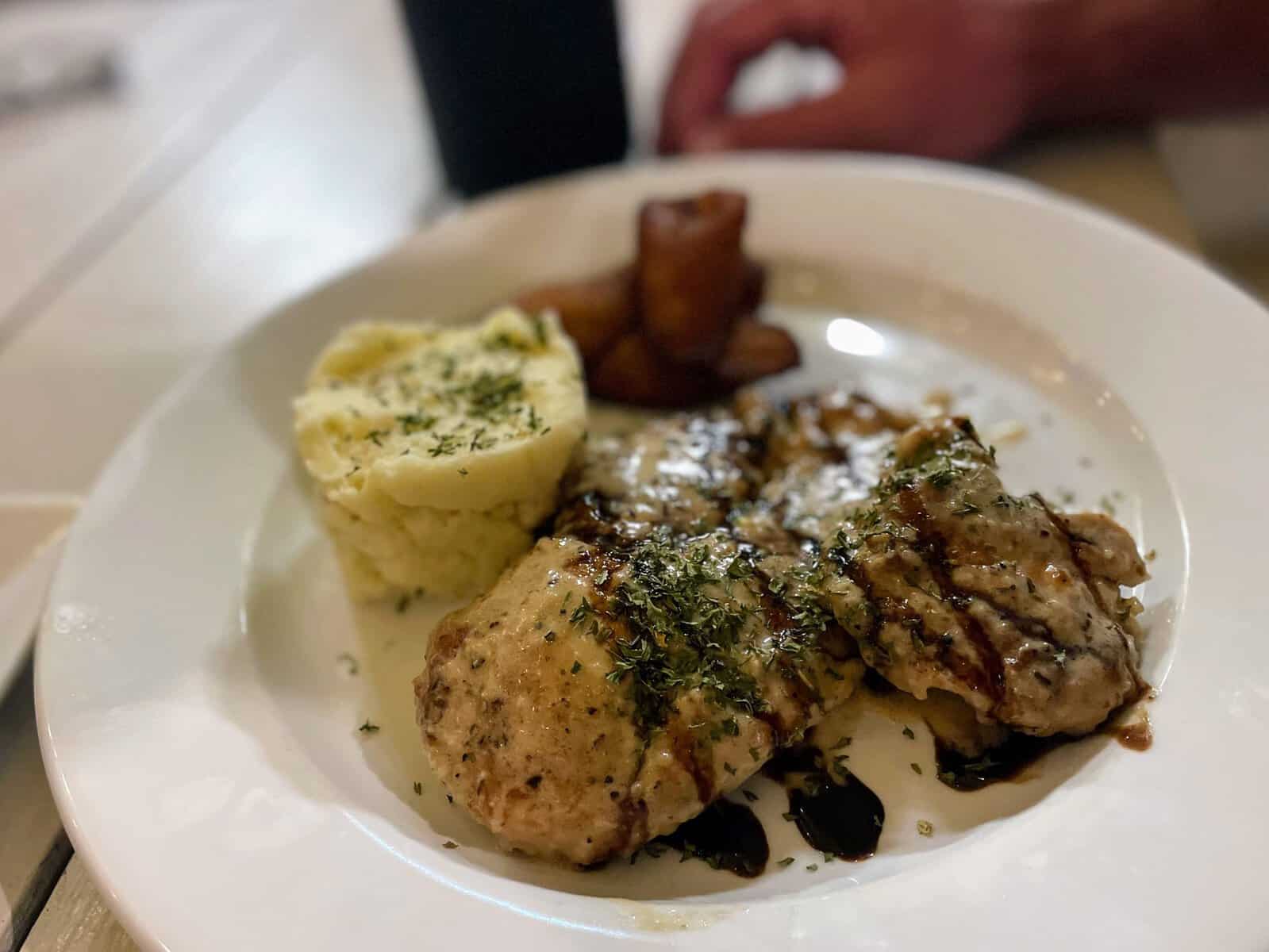
If you know us at all, you know we’re huge foodies. It’s the one area of our life we’re always willing to splurge on. From fresh conch ceviche right on the boat to a French côte de boeuf, the food here is as much a part of the BVI experience as the water is. If you’re planning to spend some time in the water, check out the Best BVI Snorkeling Spots.
There’s a lot to try across these islands, and we hope this gives you a real starting point, not just the list of “traditional dishes” you’ll find everywhere else, but a true sense of what eating in the British Virgin Islands actually looks like today.